
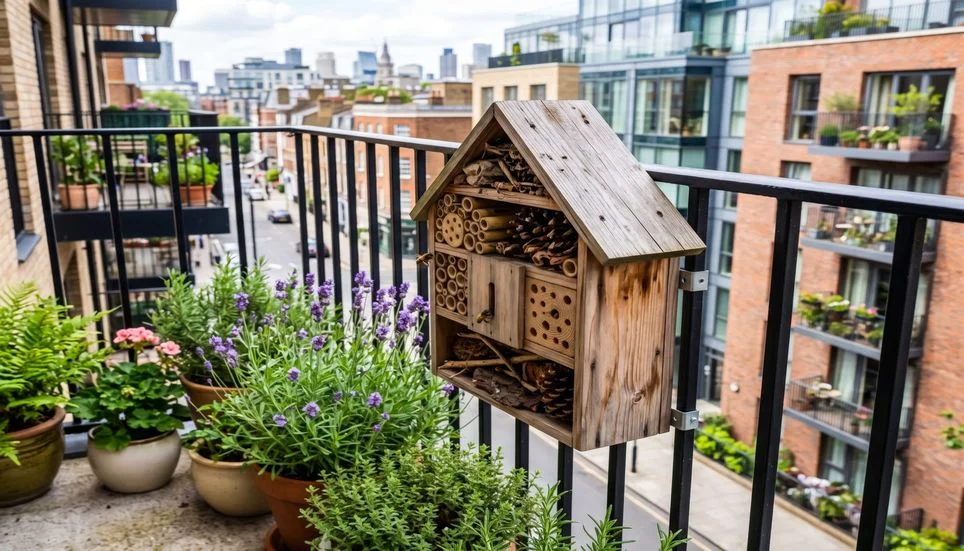
 Turning your balcony into a haven for bees and other pollinators is simple: just choose flowering, nectar-rich plants that provide food, color and biodiversity.
Your balcony can become an oasis for insects.Contrary to what we might think, cities can also be important spaces for biodiversity. Although pavement, buildings and a lack of green spaces make life difficult for many insects, balconies, terraces and patios can serve as small islands of vegetation.
With just a few carefully selected plants, it is possible to create “stops” for bees, butterflies and other pollinators that play an important role in the environment and ecosystem.
Along with adding color and fragrance to the home, these plants provide essential resources such as nectar and pollen. The key is to select species that produce plenty of flowers and, whenever possible, stagger their blooming periods to keep food available for longer.
Marigolds: color and food for pollinators
Marigolds are among the most interesting plants to add to a balcony. Their flowers typically come in shades of yellow and orange, providing obvious visual appeal while also serving as a source of food for different insects.
It is relatively easy to grow and adapts well to containers. It needs a bright location and well-draining soil. Although it can tolerate some drought once established, regular watering will encourage a longer blooming period.
To benefit pollinators, it is best to avoid using insecticides, especially during the flowering season. Removing spent flowers can encourage new blooms and keep the balcony colorful for longer.
Lavender: fragrance, flowers and biodiversity
Lavender is another excellent
Original Record.
This archived record authored by ‘Dainet Sierra’ at ‘METEORED (Your Weather)’ was recovered from data set:
 English