
ORIGIN: https://www.yourweather.co.uk/news/
Decades ago, some witnesses believed they had seen a tsunami after two historic hurricanes struck New York. A new study reveals that it was actually a different phenomenon, one that is less well known but potentially just as dangerous.
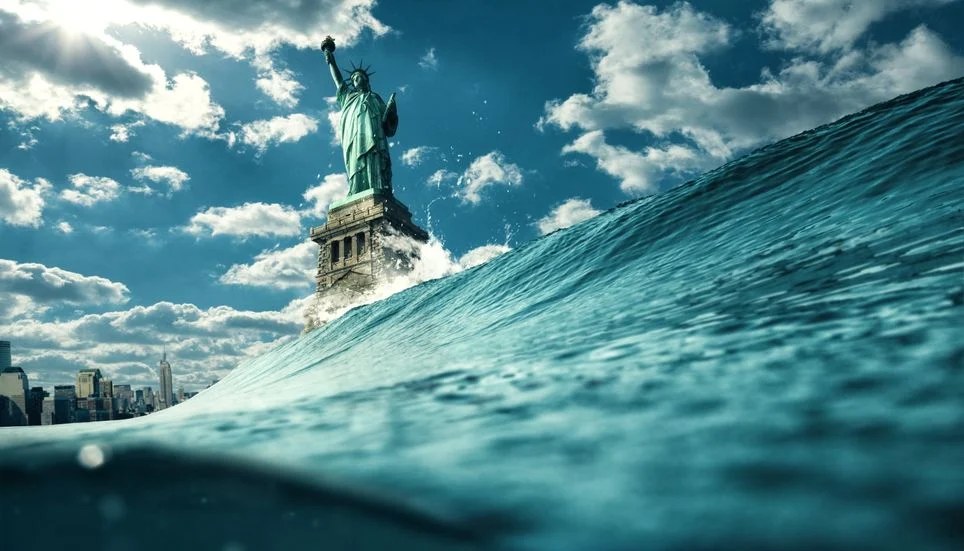 Concept image showing a giant wave approaching New York.
In 1938 and again in 1944, two powerful hurricanes struck Long Island in New York State. On both occasions, something happened that baffled many people: when it seemed the worst had passed and the winds had eased, the water suddenly rose again several hours later. For many witnesses at the time, there seemed to be only one possible explanation — a tsunami.
However, it was not a tsunami. It was a much less familiar phenomenon, but one that can be just as destructive. Scientists call it a continental shelf seiche, a kind of ocean “rebound effect” that has become increasingly important to understand as sea levels continue to rise.
A hurricane cannot generate a tsunami
Tsunamis are caused by sudden movements of the seabed, such as underwater or coastal earthquakes — the
 English