
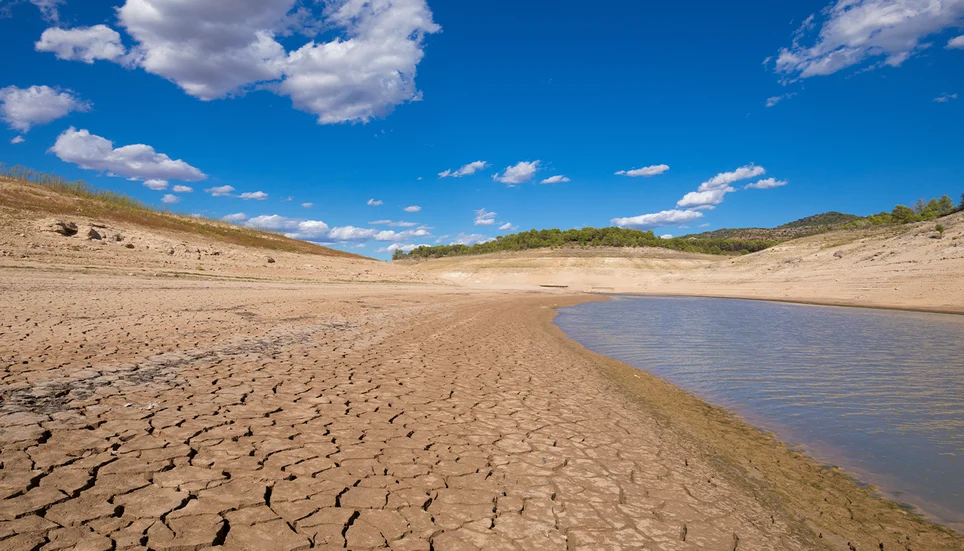
 Climate change is largely responsible for water scarcity, and a clear example can be seen in the low water levels in European rivers this summer. However, the problem is not only about the quantity of water available.
Water scarcity involves much more than simply not having enough waterThe impact of future climate change on water availability has been widely studied, but not the interaction with water quality and its impact on water scarcity. In particular, the resulting competition for drinking water between the domestic, agricultural, livestock, industrial and energy sectors.
Water scarcity involves much more than simply not having enough water. For this reason, researchers at Utrecht University have studied what taking water quality into account in each sector means for future water scarcity, because different areas of the world have different water quality requirements.
The study’s results are alarming
The results of the study, recently published in the journal Clean Water, show that deteriorating water quality and insufficient supplies will severely worsen future water shortages, exposing almost 67% of the world’s population to severe shortages of potable water by 2100.
Competition between sectors for potable water will intensify considerably, with disproportionate impacts on the manufacturing and thermoelectric power sectors. Increases of 20% in water shortages relative to their respective demands are expected in both sectors, mainly due to rising water temperatures.
 As temperatures rise, demand for water for industrial cooling increases
The study’s findings highlight the need to design and implement integrated water management strategies that address both water quantity and quality, in order to
Original Record.
This archived record authored by ‘Helena Mottram’ at ‘METEORED (Your Weather)’ was recovered from data set:

 English
Leave a Reply