
ORIGIN: https://www.yourweather.co.uk/news/
Antarctica’s sea ice is teeming with DMSP which helps algae and bacteria survive and cool the planet. But as the sea ice melts, the balance could be disrupted, with unknown consequences.
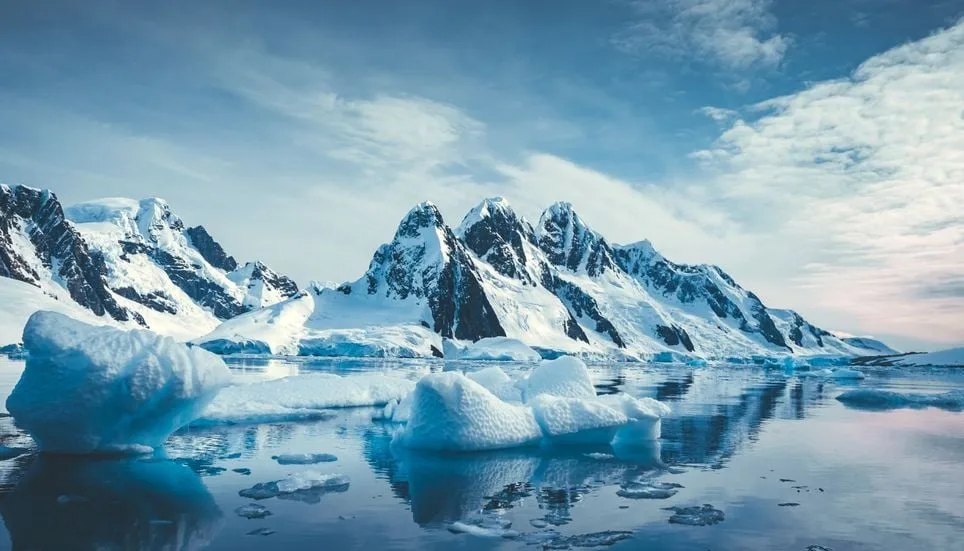 The sea ice around Antarctica is rich in planet-cooling chemicals, new research has found. Image: Adobe.
Antarctic sea ice contains significantly higher levels of a key compound linked to climate regulation than the surrounding waters, a new study from the University of East Anglia has found.
The chemical, DMSP, could help cool the planet but as climate change continues to melt the polar ice, this balance could change, with unknown consequences.
Sulfur containing chemical helps cool the Earth
The research focused on dimethylsulfoniopropionate (DMSP), a chemical produced by microscopic marine organisms like algae and bacteria to help them survive the cold and salty conditions of polar ice.
But it also has a second job – cooling the Earth down. When it degrades, DMSP releases gases that have help seed clouds and reflect sunlight.
Related articleAntarctica’s future is uncertain—but the next few decades are not
“Because the gases released from DMSP can
 English