
Original Record Source.
View the original record authored by ‘Dainet Sierra’ at ‘METEORED (Your Weather)’ via recovered Helion Archive database link:
Artificial intelligence can predict when satellite debris will fall to Earth
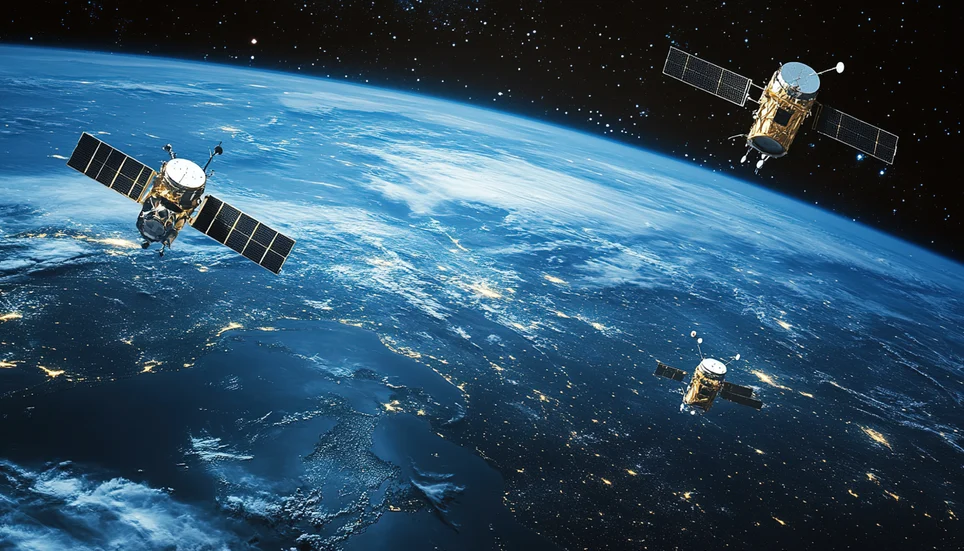
The number of objects orbiting Earth continues to grow as space activities expand, driven by satellite launches. Along with operational equipment, this activity generates space debris, consisting of decommissioned satellites and fragments from collisions. The accumulation of these objects increases the risk of collisions.
Decommissioned satellites and spent rocket stages can gradually lose altitude due to atmospheric drag, which acts even in the thinnest regions of Earth’s atmosphere. This force removes energy from their orbits and changes their trajectories until they reenter the atmosphere and descend toward the surface.
A study introduces a model that combines artificial neural networks and the laws of orbital motion to improve predictions of when space objects will fall to Earth. Developed by researchers in Indonesia, the approach uses artificial intelligence (AI) to estimate atmospheric drag and calculate orbital trajectories.
Growing number of satellites
The number of satellites orbiting Earth has increased significantly with the expansion of …….
 English