
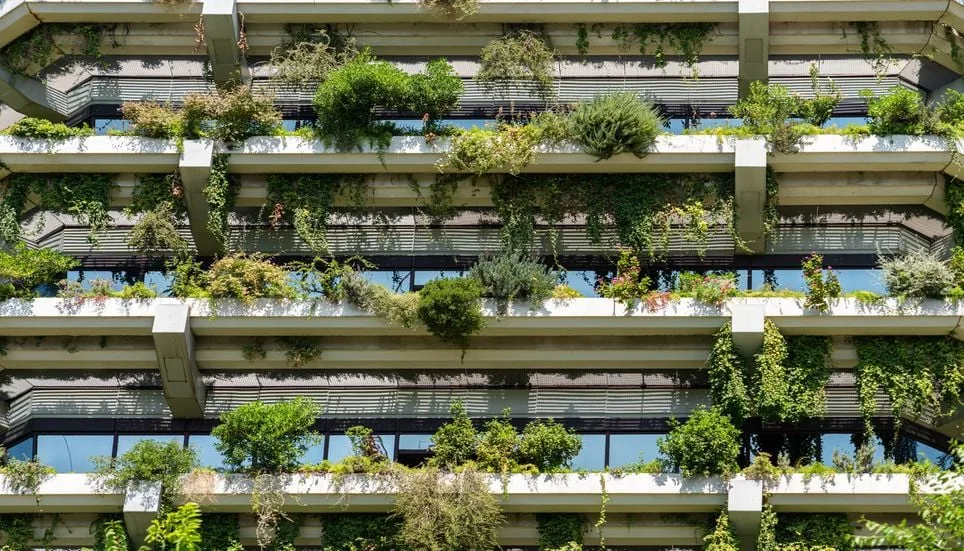
 Green roofs can reduce urban heat, but their effectiveness depends on the vegetation surviving. Lack of maintenance, drought and extreme temperatures can cause it to die off.
Vegetation on buildings significantly reduces the amount of heat they release.Green roofs and facades have become one of the most attractive solutions for combating heat in large cities. On paper, the idea is simple: replace some of the hot, impermeable surfaces of buildings with vegetation capable of providing shade, retaining water and cooling the surrounding environment.
But there is a problem that often receives less attention: putting plants on a roof does not mean they will survive, because the effectiveness of green roofs depends not only on their design, but also on their ability to withstand periods of extreme heat.
A rooftop that can become a small oasis
A conventional roof can reach very high surface temperatures during a summer day, because roofing materials absorb a significant portion of incoming solar radiation. They later release that heat, but adding vegetation changes that behavior.
Plants intercept part of the incoming solar radiation and, most importantly, use water through evapotranspiration. During this process, water moves from the soil and plants into the atmosphere while consuming energy, which helps lower surface temperatures.
It works when vegetation is active and water is available
Several studies suggest that greening rooftops could reduce urban land surface temperatures by between 0.50 and 1.50°C during the day. At night, however, the effect would be smaller, ranging from 0.14°C to 0.39°C.
Edible vertical gardens: Grow sustainability on the walls of
Original Record.
This archived record authored by ‘Dainet Sierra’ at ‘METEORED (Your Weather)’ was recovered from data set:
 English