
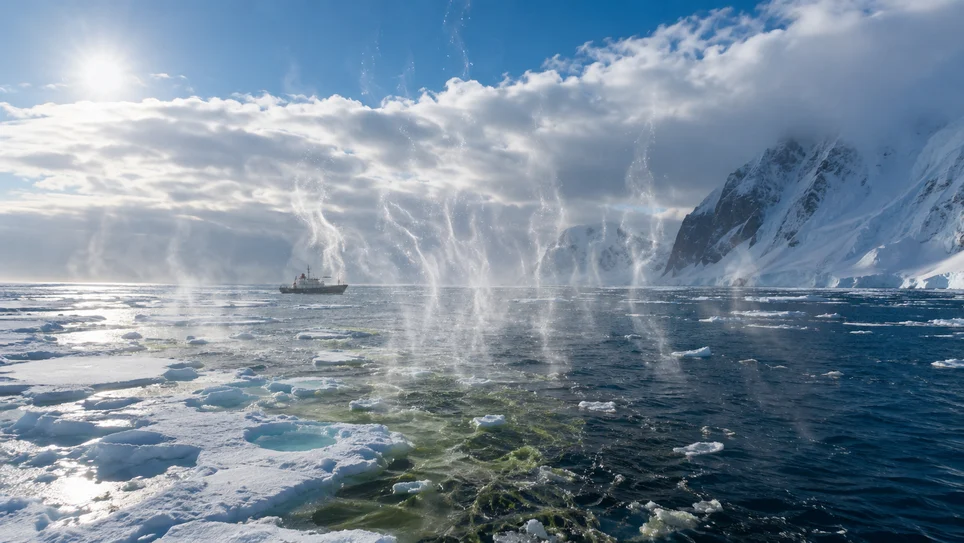
 Scientists have discovered that melting Arctic sea ice triggers a natural process that can increase cloud-forming particles in the atmosphere by 50 times in a single day
Scientists have identified a previously undocumented Arctic process that can rapidly multiply cloud-forming particles near the edge of melting sea ice.According to the latest climate data, the Arctic is warming more than three times faster than the rest of the planet. But one thing that scientists just can’t quite figure out is what’s going on with the region’s clouds.
Researchers have noted how they have a major influence on how much heat gets absorbed or bounced back into space, but they’ve found it tricky to pin down where the tiny particles that seed those clouds actually come from – especially in such a remote part of the world.
Nevertheless, fresh research led by the University of Birmingham seems to have found a major source – one that, according to the team, had only ever been demonstrated in lab conditions. Until now.
50 times more particles in a single day
In spring and summer 2022, the research team went out on the Royal Research Ship Discovery around Greenland and the Davis Strait to take measurements. Near the edge of the sea ice, where it gives way to open water, the noted something that stood out.
According to the study, iodine, sulphur and organic compounds coming off the ocean, the algae living in it and the ice itself were reacting with sunlight and churning out atmospheric particles at a
Original Record.
This archived record authored by ‘Lee Bell’ at ‘METEORED (Your Weather)’ was recovered from data set:

 English
Leave a Reply